How to Build a Travel Writing Kit: Fountain Pen, Ink and Paper Essentials
A fountain pen and a slim notebook take up less space than a phone charger, and they give you far more back. A travel writing kit is not a collection; it is a small, tested system that has to work on a train tray table, in a hostel bunk and on a sunny café wall. Decide what the kit has to do before you decide what goes in it.
Start With the Writing, Not the Shopping
Ask yourself what you will actually put on paper. A daily journal page needs a notebook with enough pages for the whole trip. Someone writing letters home needs paper that folds into a standard envelope and an ink that survives a shower of rain. Notes taken standing up in a museum need a pen that uncaps quickly and a notebook small enough to hold in one hand.
Then set a weight limit and hold to it. Three hundred grams is a generous target: two pens, a modest ink supply and one notebook. Anything past that is weight you will resent by the third day, and ink you will never use.
The Pen: What Survives a Rucksack
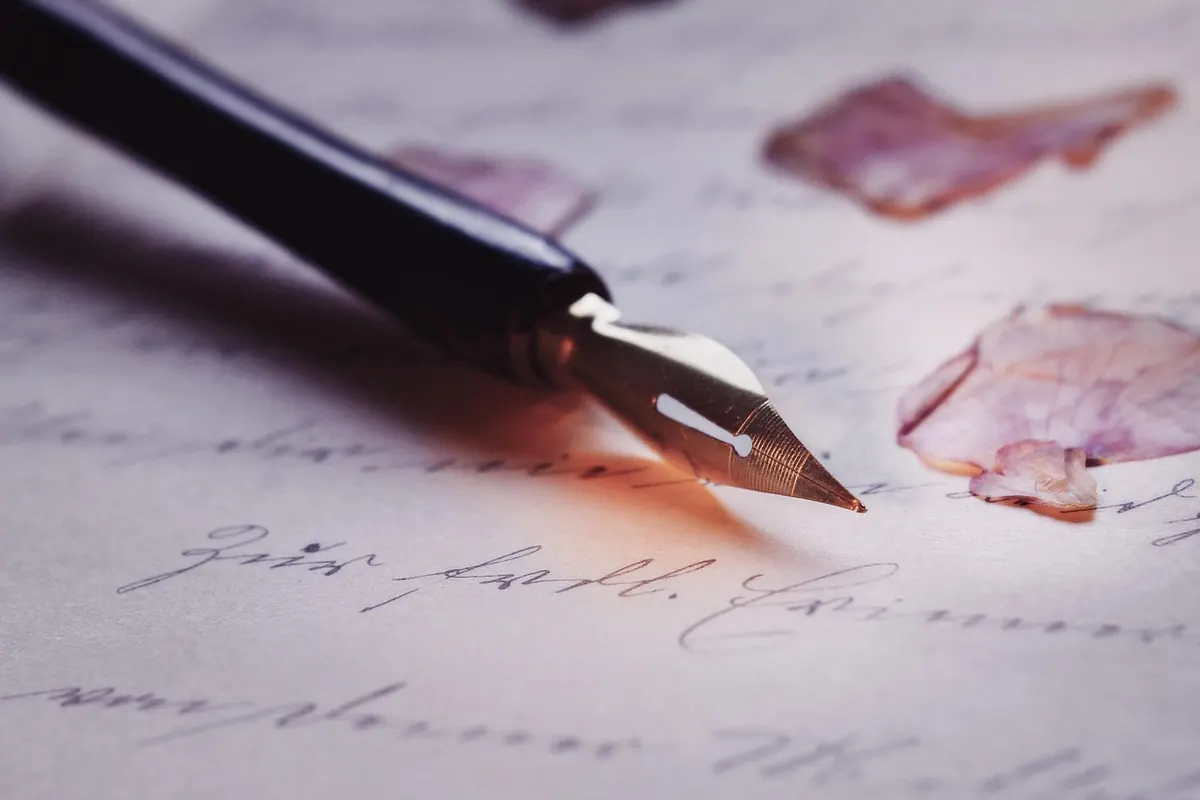
Travel asks different things of a fountain pen than a desk does. Look for a cap that screws on rather than clicks. A snap cap can work loose inside a bag, and a loose cap means a dry nib at best and an inked shirt at worst. Beyond that, favour a body that will not crack under a squeezed rucksack, a metal clip rather than a plastic one, and a section that is comfortable to grip for twenty minutes at a time.
Nib width matters more on the road than at home. A fine or medium nib suits the thin, absorbent paper you often meet in hotels and stationery shops abroad. Very broad, very wet nibs drink ink, smudge on cheap paper and leave you refilling mid-journey. If you write small, a Japanese fine is a sensible choice; if you write large, a European medium will feel quicker.
For filling systems, a cartridge-converter pen is the traveller's friend. The converter is refillable and the pen will also take a sealed cartridge, which is your fallback if the converter misbehaves. Piston fillers hold more ink but are awkward to empty and clean away from a sink. Eyedropper conversions hold a great deal, but one failed seal can empty an entire barrel into your notebook, so save those for trips where you can carry a spare bag for everything.
Air Travel and Ink
Cabin pressure drops after take-off, and air trapped in a partly filled reservoir expands and pushes ink towards the nib. Fill the pen completely before you fly, since a full reservoir has less air to expand, or travel with it empty and fit a cartridge once you land. Keep the pen nib-up in its case, and put the whole thing in a zip bag regardless. A little caution costs nothing; a leaked bottle does not.
Ink: Decant, Seal, Repeat
Cartridges offer certainty. Bottled ink offers choice, and a thirty-millilitre bottle will last a long trip. Both are liquids, so if you are flying with hand luggage, the usual cabin limits apply and the ink belongs in your clear liquids bag.
If you take bottled ink, decant it. A small plastic vial holding five to ten millilitres is plenty for a fortnight of journaling and is far safer than glass in a soft bag. Fill it two-thirds full, wrap it in a paper towel, and seal the towel and vial together inside a zip bag. The paper towel is not there to protect the bottle; it is there to drink the spill before it reaches your clothes.
- Blue-black or a dark blue for everyday pages: tolerant of cheap paper, easy to read.
- A permanent or document ink for letters and anything you want to keep. These resist water and fading but need more thorough flushing before you store the pen.
- One colour, not five. A second ink only earns its place if you are carrying a second pen for it.
Paper: The Half of the Kit Nobody Plans For
A good nib on poor paper is a disappointment. Look for roughly 80 to 100 gsm, smooth but not glossy, and described by the maker as suitable for fountain pens. Below about 70 gsm you will get show-through, feathering and a blotter of a page.
For a journal, an A5 hardcover with a hundred to two hundred pages is the classic compromise between portability and room to write. A bound book with a ribbon marker lies flatter than you expect and will not lose pages. For notes, an A6 pocket book costs little and fits in a jacket. For letters, a pad of airmail-weight paper and a packet of matching envelopes fold thin and post cheaply; check the paper is light enough not to attract a surcharge at the counter.
Whatever you choose, test it before you go. Write half a page with the pen and ink you plan to take, then check how long the ink takes to dry and whether the line spreads. Ten minutes at the kitchen table saves a week of smudged pages.
The Kit List
- One fountain pen with a screw cap, fine or medium nib, filled or fitted with a converter
- One backup: a second fountain pen, or a rollerball if you need to write through carbon copies
- A sealed pack of cartridges in the correct format for your pen
- One five to ten millilitre vial of ink, bagged with a paper towel
- One A5 notebook and one pocket notebook
- A thin folder of writing paper and envelopes
- Blotting paper, or a folded paper towel, for quick drying
- A cotton handkerchief for wiping nibs and fingers
- One zip bag holding the pens and all ink
Living With the Kit on the Road
Build one habit: at the end of every writing session, cap the pen and return it nib-up to its slot. Heat is the enemy of a filled pen, so keep it out of a hot car, off a sunny windowsill and away from a radiator; a warm pen expands its air and leaves a ring of ink in the cap. Cold is gentler, but a frozen pen can crack, so bring it inside from the car overnight.
Flush the pen whenever you change inks, and again at the end of the trip before you pack it away. Plain cool water is enough for most inks, and a few cycles of draw-and-expel will clear the feed. If a permanent ink has been sitting in the pen for weeks, flush it a little longer and let the pen dry uncapped overnight, nib on a paper towel.
Finally, treat ink as the liquid it is. Keep vials in the liquids bag, never loose in a rucksack pocket with a laptop, and never trust a glass bottle in a soft bag.
The Two-Minute Test Before You Go
Fill the pen or fit a fresh cartridge a day ahead, so the feed has time to settle. Cap it, drop it in its case and shake the case gently over a sink. Any ink on the section means the seal needs attention before you travel. Write a page on the paper you are taking and check the dry time. Then take the whole kit apart, put it back together and pack it exactly where it will live for the trip.
Do that once, and the kit becomes invisible: silent in the bag, ready in a moment, and there when you stop walking and want to write something down.